
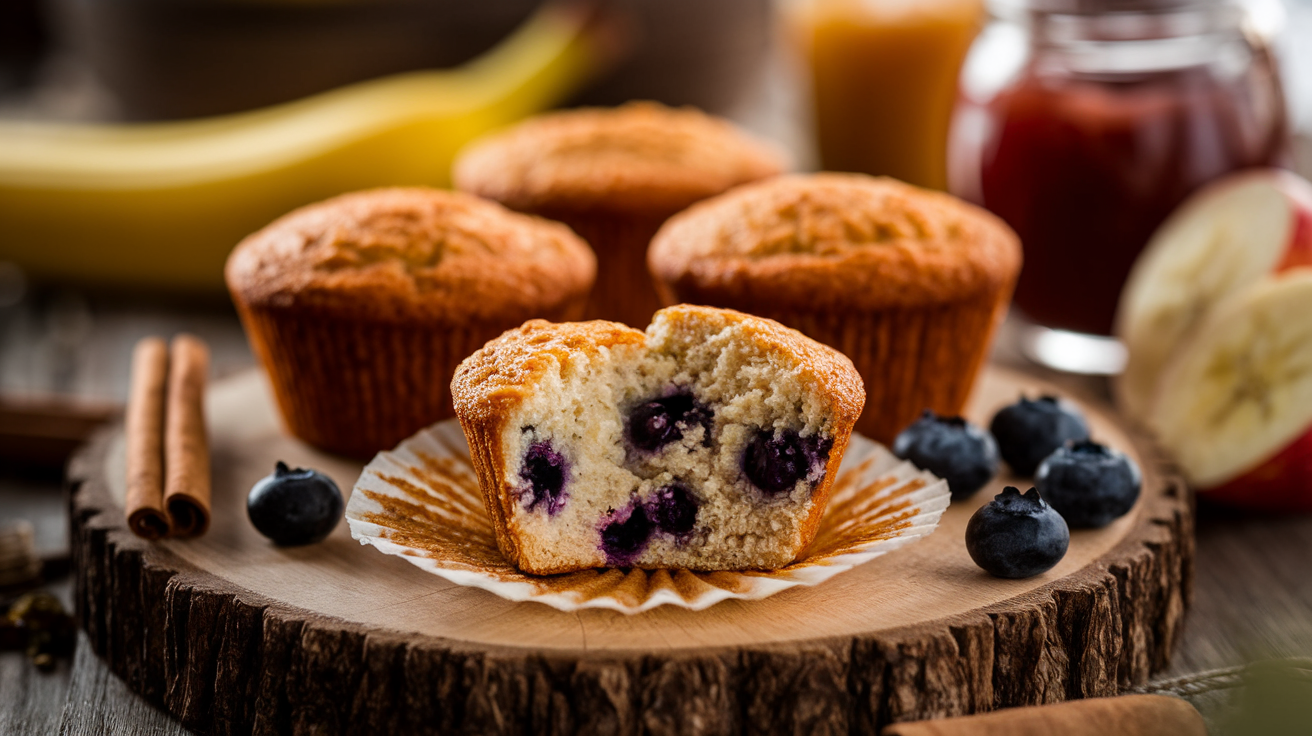
ULTRA GUT-FRIENDLY HIGH-PROTEIN
MUFFINS
(ZERO OIL · 9 FIBER TYPES)
Protein
~9G
Fiber
~7G
Calories
~118
Prep Time
15M
Bake Time
27M
~9g protein per muffin with 9 distinct fiber types—the most gut-diverse muffin you'll find. Green banana flour (RS2), acacia fiber, PHGG, konjac glucomannan, inulin, psyllium, chia, beta-glucan, and RS3 from overnight cooling. Zero added oil (tigernut flour's natural fat handles that). At ~118 calories with ~7g fiber, these pack serious nutrition into a grab-and-go format. Easily adaptable for vegan diets with flax eggs.
Ingredients
Makes 10-12 muffinsDry Ingredients
Wet Ingredients
Optional Add-Ins (Pick One)
Step-by-Step Instructions
Preheat and Prep
Preheat the oven to 425°F (220°C). Line a 12-cup muffin tin with paper liners or use silicone cups for easy release.
Bloom the Binders
Stir ground chia seeds and psyllium husk powder with ½ cup warm water in a small bowl. Rest for 5 minutes until a thick gel forms. This gel replaces gluten's binding role and adds prebiotic fiber.
Mix the Dry Base
In a large bowl, whisk together tigernut flour, pea protein powder, oat flour, green banana flour, acacia fiber, PHGG, konjac glucomannan, collagen peptides, baking powder, baking soda, cinnamon, turmeric, black pepper, and salt. Break up any protein powder clumps — all the fiber powders blend right in.
Combine Wet Ingredients
In a separate bowl, whisk whole egg, egg whites, almond yogurt, mashed banana, applesauce, pumpkin puree, allulose blend, vanilla extract, and apple cider vinegar until smooth. Stir in L-glutamine powder until dissolved.
Fold and Fill
Pour the wet mixture and chia gel into the dry ingredients. Stir gently for ~15 strokes—avoid overmixing. If batter is too stiff, add water 1 Tbsp at a time. Fold in optional add-ins if using. Fill each muffin cup ⅔ to ¾ full.
🏔️ The Dome Trick
Bake at 425°F for 5 minutes (this creates beautiful domed tops), then reduce to 350°F (175°C) and bake for 17-22 more minutes until golden and a toothpick comes out clean. Cool completely on a wire rack (~30 min).
💡 Why the dome trick? Protein powder makes GF batter denser, which often yields flat tops. The initial blast of high heat sets the exterior quickly, forcing the batter to rise up instead of spreading out.
The Overnight Resistant Starch Protocol
Refrigerate Overnight
Place cooled muffins in the fridge for 12-24 hours at 4°C (39°F). During this time, amylose chains re-crystallize into RS3 resistant starch—a type of prebiotic fiber that feeds beneficial gut bacteria.
Reheat and Enjoy
Reheat at 300°F for 8-10 minutes, or microwave 20-30 seconds. RS3 survives reheating—the resistant starch is locked in permanently after retrogradation.
💡 Why this works: When starch cools, amylose molecules reassemble into tight crystalline structures that resist digestion in the small intestine. They pass to the colon where they're fermented by beneficial bacteria, producing butyrate—a short-chain fatty acid critical for gut lining health.
⭐ Pro tip: Cool muffins fully (or refrigerate overnight) before eating to maximize RS3 resistant starch. Reheat briefly if desired — RS3 survives gentle warming. This converts additional starch to gut-feeding resistant starch for free.
Why Pea Protein?
Bakes Better Than Most Powders
Pea protein has a neutral baking profile—it doesn't get rubbery or chalky like whey or casein. It holds moisture and creates a tender crumb, making it ideal for gluten-free muffins.
The 20-25% Sweet Spot
Replacing 20-25% of the flour weight with protein powder maximizes protein without destroying texture. More than that and muffins turn out dense and dry. This ratio (55g protein powder to 170g total dry base) lands around 32%.
Oat Flour Substitutes (30g, 1:1)
GF oat flour gives the best crumb—fine, starchy, neutral. But these work too, same weight:
- Sorghum flour — closest match. Mild, slightly sweet, gluten-free. Nearly identical crumb.
- Chestnut flour — slightly denser, nutty flavor. Adds a warm, earthy note that works well with cinnamon.
- Coconut flour — use only 20g (not 30g). Highly absorbent — add 1–2 extra Tbsp water to compensate. Slightly sweet.
- Cassava flour — most neutral flavor, very smooth texture. Best option if you want zero flavor change from oat.
- Quinoa flour — slightly bitter raw, mellows when baked. Toast it first (dry pan, 3 min) for best flavor.
Banana Flavor + Cinnamon = 🤌
Banana-flavored pea protein complements the cinnamon and real banana in the batter. The flavors reinforce each other instead of competing, so the protein powder blends seamlessly into each muffin.
Extra Leavening Compensates
Baking powder is bumped from 1½ to 2 tsp because protein powder absorbs liquid and makes batter denser. The extra leavening + dome trick = perfect rise every time.
🔬 Why Zero Oil Works
Tigernut Flour = Built-In Fat
Tigernut flour is ~25% fat (mostly oleic acid, the same healthy fat in olive oil). One cup delivers ~28g of built-in fat—providing all the tenderness added oil would normally provide.
RS5 From Natural Fat
Tigernut's natural fat still forms RS5 amylose-lipid complexes during cooling. The resistant starch benefits without a single drop of added oil.
4 Moisture Sources
Banana + applesauce + chia gel + eggs = four moisture sources that make added oil completely redundant. Applesauce pectin provides structure while adding gut-friendly soluble fiber.
RS3 Is 100% Temperature-Driven
Retrogradation (RS3 formation) is driven entirely by cooling temperature—zero fat needed. The starch re-crystallizes into prebiotic fiber regardless of oil content.
💡 The Bottom Line
Most GF muffin recipes add oil on autopilot. But with tigernut flour's 28g of natural fat per cup, added oil is pure redundancy. Removing it saves significant calories per batch while the flour's oleic acid handles tenderness, RS5 formation, and mouthfeel all on its own.
Nutrition Facts
12 servings per batch
* The % Daily Value (DV) tells you how much a nutrient in a serving of food contributes to a daily diet. 2,000 calories a day is used for general nutrition advice. Values are estimates based on the listed base ingredients only (no optional add-ins). 9 fiber types: prebiotic (tigernut), soluble + insoluble (chia/psyllium), RS2 (green banana flour), RS3 (overnight protocol), beta-glucan (oat flour), acacia fiber, PHGG, and glucomannan.
Hidden Iron Boost
Pea protein is 75-100% DV iron per full scoop. Even the small per-muffin portion delivers ~1.6mg (9% DV). Eat two and you're at ~3.2mg (18% DV)—more than a serving of spinach. Pair with vitamin C (like blueberries) to boost absorption.
Two Muffins vs. A Bowl of Oatmeal
Two muffins deliver 18-20g protein, 14g fiber across 9 distinct types, and collagen + L-glutamine for gut lining support — vs. 5g protein and 1 fiber type in a bowl of oatmeal. No contest.
| 2 Muffins ~236 cal |
Oatmeal ~150 cal |
|
|---|---|---|
| Protein | 18-20g | 5g |
| Fiber (diverse types) | 14g | 4g |
| Iron | ~3.2mg (18% DV) | 1.9mg (24% DV) |
| Fiber diversity | 9 types prebiotic · soluble · insoluble · RS2 · RS3 · beta-glucan · acacia · PHGG · glucomannan |
1 type beta-glucan |
| Omega-3 | 0.56g + collagen + L-glutamine | Trace |
| Gluten-free | ✅ | ❌ unless GF oats |
Pea Protein Baking Tips
Don't Overmix
Protein powder develops a gummy texture when overworked. Stick to ~15 gentle strokes—lumps are fine.
Extra Liquid Is Essential
Pea protein absorbs 2-3x more water than flour. That's why we use ½ cup liquid instead of ⅓. If batter is stiff, add more 1 Tbsp at a time.
Banana Flavor = Flavor Synergy
Banana-flavored pea protein reinforces the real banana already in the batter. The flavors stack instead of competing, so the powder disappears.
Lightest Texture of All Plant Proteins
Pea protein yields the lightest, fluffiest crumb of any plant protein in baking—noticeably better than hemp, soy, or rice protein.
📦 Storage Cheat Sheet
DAYS 1-3
Refrigerator. RS3 forms and strengthens. Best texture and gut benefits.
DAYS 4+
Freezer. RS3 survives freezing completely. Wrap individually for easy grab-and-go.
REHEAT FROZEN
350°F for 12-15 minutes from frozen. Or microwave 45-60 seconds. RS3 stays intact.